Digitally Wired: How Distribution System…
The 8th edition of the European Biomethane Benchmark reveals sustained growth in the biomethane sector, in a context of expanding renewable energies and an evolving regulatory framework.
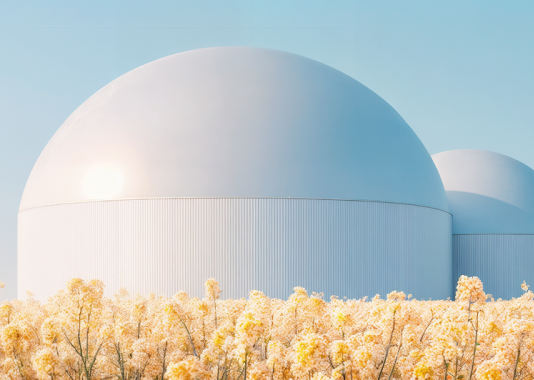
The biomethane sector in Europe continues its strong growth momentum, with more than 1,500 biomethane plants recorded across Europe at the end of 2024. This growth is driven particularly by France and Italy, although new key markets are emerging, notably in Spain.
of biomethane production.
60 TWh/year
This 60 TWh/year capacity is the combined output of more than 1,500 biomethane plants recorded in Europe at the end of 2024. Nevertheless, it represents less than 5% of the continent’s total gas consumption.
The year 2024 confirms the acceleration of the sector, with a total biogas production capacity in Europe exceeding 260 TWh/year, including 60 TWh/year of biomethane. However, the growth potential remains immense and largely untapped across the continent.
The European market shows a significant gap between current production and the identified methanisable potential:
Support mechanisms for the biomethane sector are evolving, shifting from production-focused schemes toward mechanisms supporting end-uses in countries where the sector is mature.
Historically, support was mainly provided through feed-in tariffs, feed-in premiums, and subsidies for biomethane production facilities. These production-oriented support mechanisms remain in place in countries where the sector is still emerging, as they offer long-term stability for investors and are simpler to implement.
Today, in mature markets, the trend is moving toward incorporation mechanisms that direct biomethane valorisation toward final uses.
This relies in particular on the introduction of blending obligations. In the transport sector in France and the Netherlands, for example, fuel suppliers will gradually become subject to biomethane incorporation mandates.
The value of the associated certificates plays a central role in covering the additional cost of producing biomethane compared with the market price of natural gas. Prices vary widely, but these certificates remain essential to bridging the gap between revenue from gas molecule sales and production costs, enabling the sector’s development without burdening public finances. Certificates (notably GOS and POS) can also be traded on a voluntary basis, for example within the EU ETS framework.
For the biomethane sector to continue its development and reach the ambitious target of 35 bcm by 2030, several major challenges must be addressed:
Partner Energy | Paris
Sebastien is a Partner in the Energy practice based in Paris. He brings with him more than 25 years of experience in the energy sector, with strong expertise across the entire energy value chain, and a focus on market analysis, strategic positioning, and regulatory frameworks.