Driving circular performance: defining and…

The first comprehensive, evidence-based study of how cybersecurity leaders in Hong Kong actually make investment and vendor selection decisions, not in theory, but under budget pressure, regulatory scrutiny, talent constraints, and a relentless threat landscape

Hong Kong's cybersecurity sector has never faced greater pressure. Cyber incidents reached a record 15,877 in 2025 — a 27% year-on-year increase — while financial losses from cybercrime hit HK$3.04 billion in the first half of 2025 alone. At the same time, the landmark Protection of Critical Infrastructures (Computer Systems) Ordinance (PCICSO) came into force in January 2026, fundamentally reshaping the regulatory landscape across eight critical sectors. Yet most organizations continue to operate under flat budgets, with 95% citing a persistent shortage of skilled cybersecurity professionals.
Against this backdrop, HKCNSA and Sia joined forces to answer one central question: how do cybersecurity leaders in Hong Kong actually make decisions? Not according to best-practice frameworks, but in practice — under real constraints, with real trade-offs.
This study draws on four complementary sources of insight:
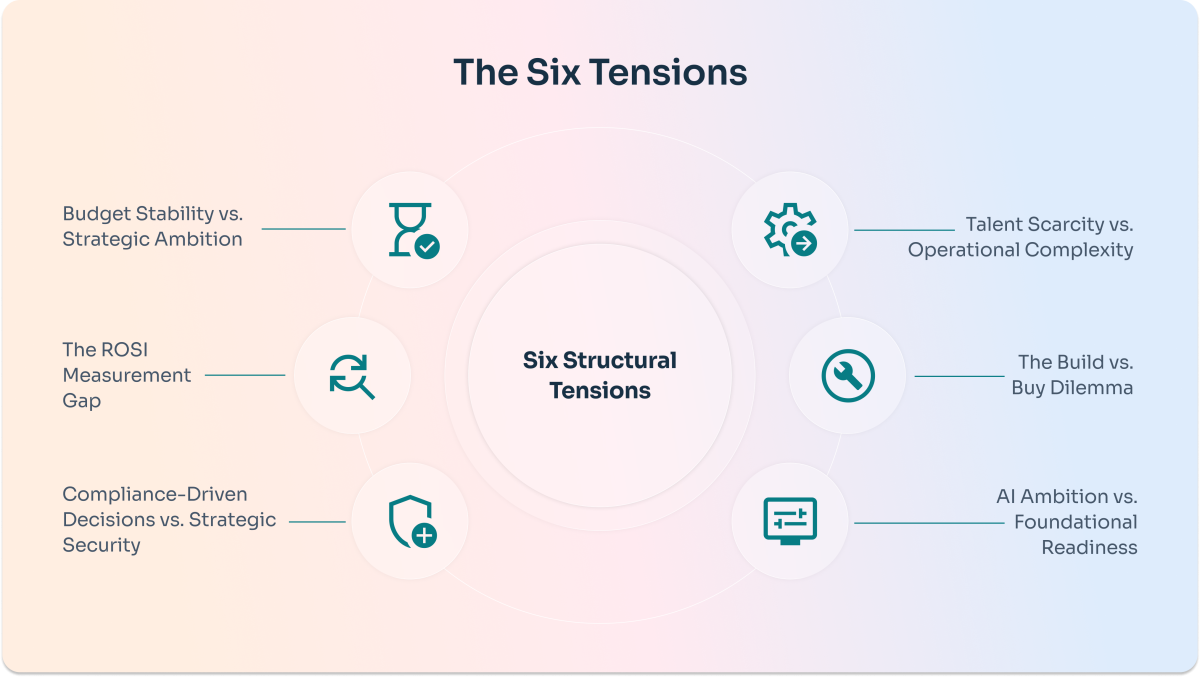
The data does not simply describe a market investing in cybersecurity. It reveals a market under tension — and six interconnected structural forces define its current state:
The research report delivers a clear message: organizations can no longer solve escalating cyber threats simply by accumulating new tools. The critical gap—and the true differentiator for resilient enterprises—lies in strategic architectural alignment and modernized governance.
The real-world case studies reveal that structured procurement is non-negotiable, geopolitical risk has become a core selection criterion, and the aspiration of a single unified global security stack is increasingly unachievable across the Greater China region. Instead, leaders must skillfully orchestrate hybrid architectures. What truly matters is technical integration, organizational maturity, and local ecosystem support.
Drawing on lessons from three senior cybersecurity leaders, it is clear that organizations must break silos structurally and make cyber risk tangible to boards through real-world incidents and financial metrics like Return on Security Investment (ROSI). To enable this—and to escape a purely reactive compliance mindset under stringent mandates like the PCICSO—security teams must fundamentally overhaul their Governance, Risk, and Compliance (GRC) infrastructure, moving away from unsustainable manual spreadsheets toward automated, AI-augmented platforms. Finally, as they implement these modernizations, leaders warn that AI must be treated as a capability to be rigorously validated, not simply a strategy to be blindly mandated.
Ultimately, the real takeaway of this study is a call for new foundation and disciplined execution. Overcoming the talent shortage and AI readiness gaps requires breaking down internal silos and aligning cybersecurity directly with broader business objectives. Success demands moving away from isolated point solutions toward a cohesive, strategically governed security program.
Partner, Cybersecurity & Data Protection | Hong Kong
Michael is a Partner in Hong Kong leading the APAC Cybersecurity & Data Protection BL. With 25 years in management and technology consulting, he specializes in technology risk, cybersecurity and privacy, helping organizations manage cyber risks and strengthen resilience.