Digitally Wired: How Distribution System…
The electrification of road freight depends as much on fleets as on a dense, high-power European charging network. Discover the key findings of our latest study on public charging for heavy-duty trucks in Western Europe.
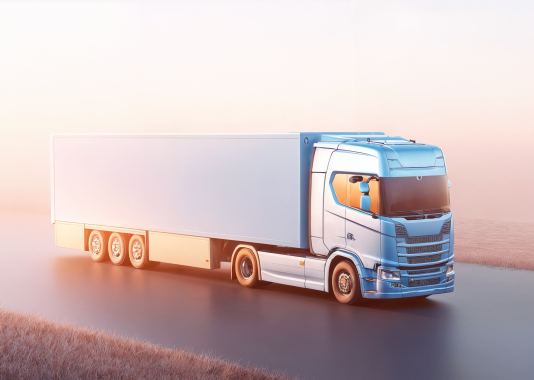
Road freight transport accounts for a large share of the sector's emissions. The battery-electric truck (BET) is emerging as a key decarbonization lever, even for long-haul operations.
In Western Europe, adoption is accelerating, driven by technological progress, falling battery costs, tightening regulation, and low-emission zones.
The Netherlands, a European frontrunner, combines demand-side support with lower acquisition costs, but overall momentum remains uneven. The relaxation of the EU's CO₂ standards for heavy-duty vehicles (March 2026) could also slow the drive toward zero emissions.
Nevertheless, the challenge is now shifting from the vehicle to the charging infrastructure.
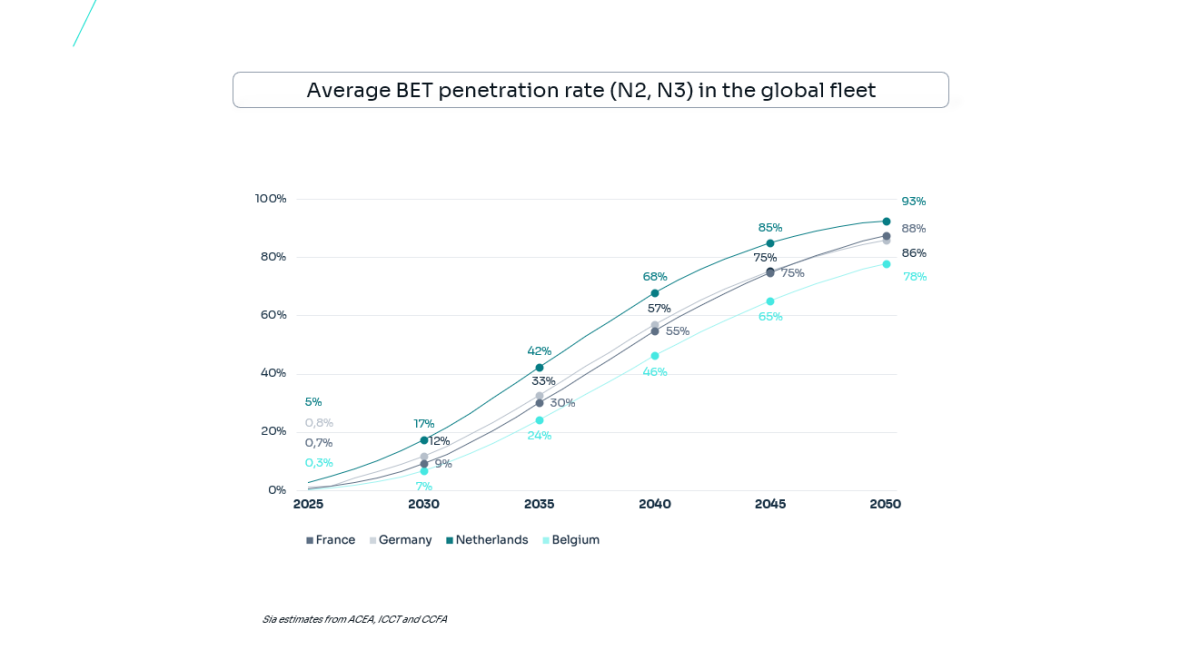
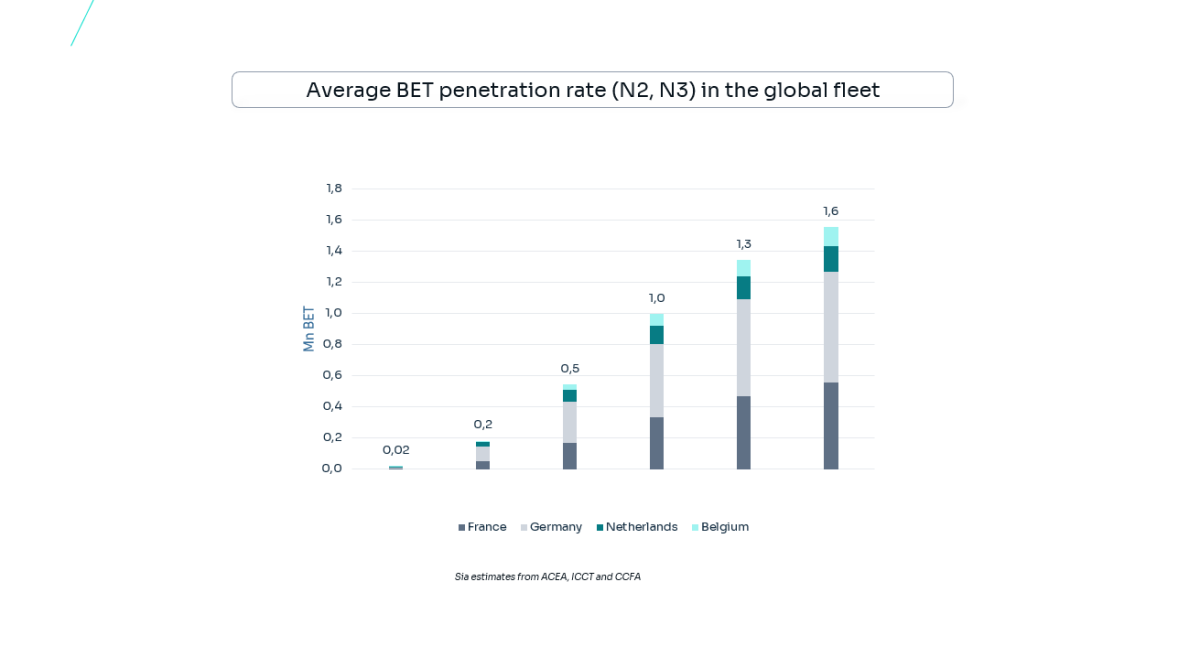
To estimate public charging needs across the three segments (slow/overnight, ultra-fast, MCS), Sia's top-down model cross-references total freight activity (domestic, international, cabotage, transit) in a given country (billions of tonne-kilometres) with BET penetration rates by vehicle segment (N2, N3) and their respective electricity consumption.
By 2050, charging needs for electric heavy-duty trucks (public and depot-based) would reach 80 to 90 TWh per year across the four markets studied: France, Germany, the Netherlands, and Belgium. Three factors drive this estimate:
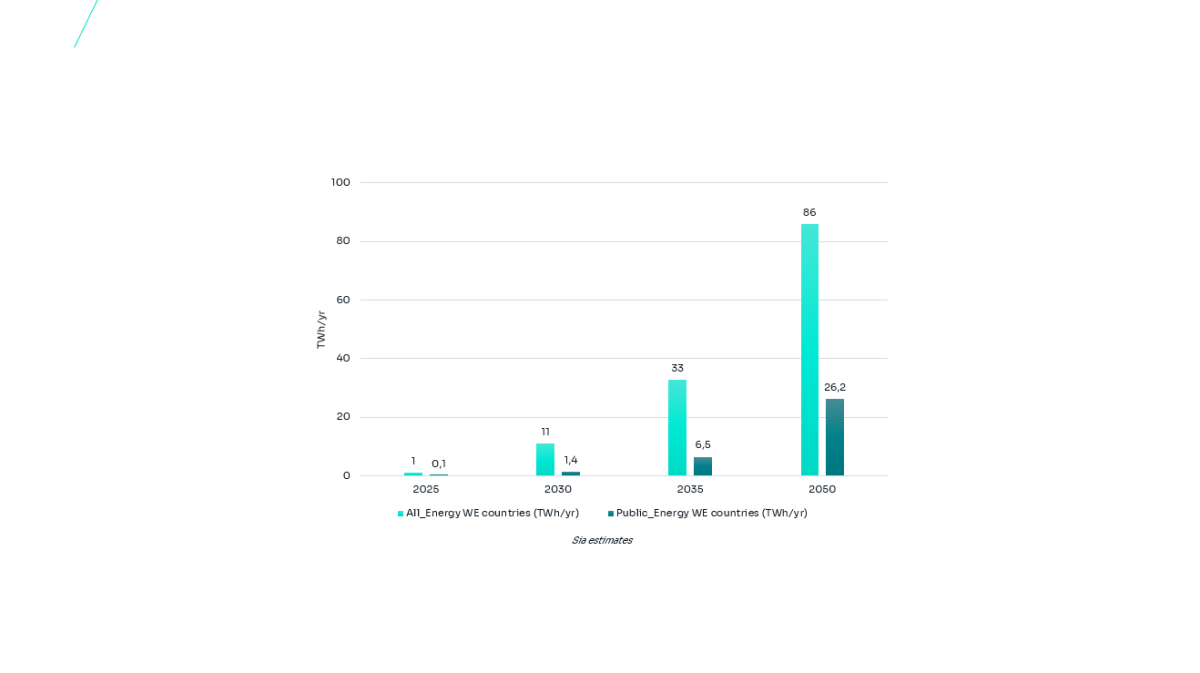
According to our estimates, more than 70,000 public charging points will be needed by 2050 across the four countries, including 15,000 to 20,000 as early as 2035.
Three types of charging will coexist: slow or overnight charging (~100 kW, CCS2), ultra-fast CCS2 (400 to 600 kW), and the future megawatt standard (MCS), dedicated solely to regulatory rest breaks along the highest-traffic corridors.
The public charging mix will change significantly by 2035 and beyond.
Although ultra-fast CCS2 (400 to 600 kW) is overwhelmingly dominant today (99%), its share will decline by 2050 in favor of slow/overnight charging and MCS:
Projections beyond 2040 remain uncertain, however, given the many possible disruptions: autonomous trucks, inductive charging, solid-state batteries...
Deploying this infrastructure represents an investment of around €3 billion by 2035 for Germany, France, Belgium, and the Netherlands, excluding grid connection and reinforcement costs.
The software layer determines both the performance of the whole system and the profitability of the assets.
Supervision, maintenance, payment and billing, energy optimization, integration into the transport plan, reporting... these services are becoming essential to ensure the operational efficiency of logistics.
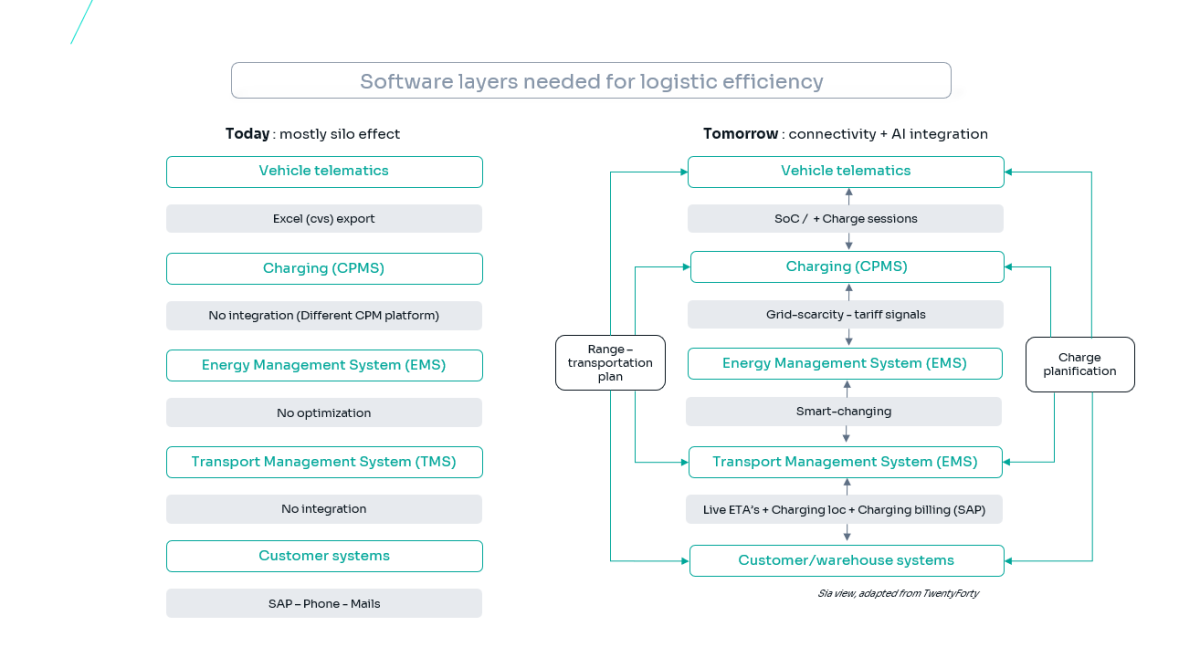
A dense ecosystem is taking shape around the infrastructure: e-MSPs, energy suppliers, charging optimizers, carriers, and fleet managers, all seeking profitability without compromising logistics efficiency.
Several disruptions are emerging.
Plug & Charge and autocharge automate authentication and billing, reshuffling the cards in payment and roaming.
Energy optimization through an AI-powered Energy Management System is becoming essential to charge more vehicles within constrained grid capacity.
Finally, cybersecurity is emerging as a cross-cutting layer, as charging becomes a critical asset connected to the grid.
The challenge will be to deploy this infrastructure ahead of demand, in a coordinated approach between industry and public authorities.
Today's choices (technology mix, locations, partnerships) will determine the competitiveness of tomorrow's decarbonized transport.
Sia supports mobility, energy, and public sector players in the sizing, strategy, and implementation of this transition.
To continue the conversation, join us for the presentation of our study’s findings on October 7 from 6:30 p.m. at 21 rue de Berri, Paris 8.
Managing Director | Paris, France
Stéphanie is a Managing Director based in Paris, specializing in digital transformation, project management, and change management in the energy and utilities sector. She helps organizations optimize processes, enhance CRM, and drive agile transformation initiatives.