Digitally Wired: How Distribution System…

After years of turbulence, the airline industry is rewriting its flight plan, facing new risks, reshaping demand, and investing in resilience.

The airline industry stands at a pivotal inflection point. After weathering one of the most turbulent periods in modern aviation history, carriers are now navigating a complex and rapidly shifting operating environment. The recovery from pandemic disruption has proven anything but linear. Demand is returning—but in new patterns. Business travel is rebounding slowly, operational complexity is intensifying, and new pressures—from labor shortages to sustainability demands—are reshaping how airlines must think, plan, and invest.
Today’s challenges are layered and interdependent. Airlines face heightened financial volatility, fueled by unpredictable revenue streams, rising operational costs, and investor skepticism. Staffing gaps continue to strain operations, while aging infrastructure and legacy IT systems hinder agility and expose cybersecurity vulnerabilities. Add to this the volatility of fuel prices and the growing imperative to decarbonize operations, and the result is an industry under pressure from all sides.
Yet within this disruption lies opportunity. The path forward will be defined not just by cost control or network planning, but by strategic transformation. Airlines are investing in next-generation technologies to modernize outdated systems, enhance customer experiences, and harness the power of data. They are embracing digitalization, revamping workforce models, strengthening cyber resilience, and rethinking environmental strategies—all in an effort to compete in a fundamentally different marketplace.
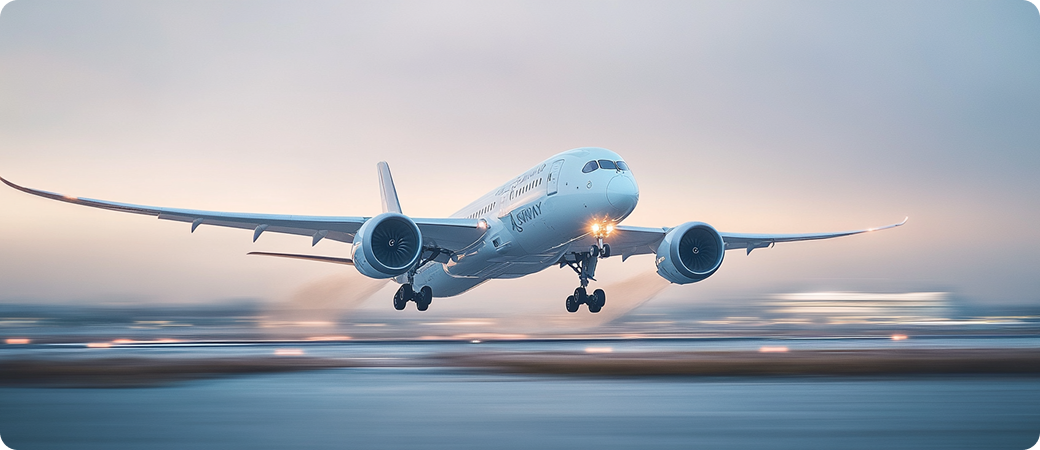
The COVID-19 pandemic fundamentally altered air travel. Practically overnight, demand collapsed, networks were dismantled, and longstanding assumptions about traveler behavior were upended. While the worst of the crisis has passed, its effects continue to ripple through the airline industry. Today, rebuilding passenger confidence and adapting to new travel patterns are among the most urgent imperatives facing carriers.
The recovery has been uneven. Leisure travel has rebounded more quickly, while corporate travel remains constrained - reshaped by hybrid work and digital alternatives to in-person meetings. Airlines are also navigating a more cautious and discerning customer base. Travelers now expect more flexibility, enhanced safety protocols, and seamless digital experiences. Additionally, demand volatility - driven by geopolitical concerns, economic uncertainty, and evolving public health dynamics - continues to complicate forecasting and capacity planning.
These realities have forced airlines to rethink how they engage with travelers at every touchpoint. Investment is increasingly focused on regaining trust and offering a more agile, responsive customer experience. Health-related disruptions during the pandemic highlighted the need for scalable, contactless solutions that reduce friction while boosting safety. Airlines are responding with integrated digital check-in systems, biometric boarding, and real-time service notifications. The goal is simple: create a more controlled and personalized journey that restores confidence and loyalty.
At the same time, airlines are investing in deeper data analytics to better understand and anticipate shifting passenger behaviors. AI-powered platforms are enabling real-time segmentation, dynamic pricing, and targeted promotions that reflect today’s more nuanced demand environment. This kind of hyper-personalization helps airlines adapt quickly, offering relevant experiences that drive engagement and retention even amid uncertainty.
Another key area of investment is route restructuring and network agility. With traditional travel corridors disrupted, airlines are optimizing route maps based on emerging demand trends. Point-to-point service, secondary markets, and flexible fleet deployment have all become vital tools in adjusting to the new normal.
This evolution in demand and traveler expectations will be a recurring theme throughout this article series. Future installments will explore how airlines are using advanced technologies, digital platforms, and operational innovations to tackle systemic challenges. From financial volatility and workforce constraints to sustainability and cybersecurity, the focus will be on how strategic investment is helping to reset and reimagine the airline business model.
The journey from disruption to demand restoration is far from over - but for airlines that embrace innovation and remain close to their customers, it is a path that leads not just to recovery, but to long-term resilience.
Sia partnered with major Airline to modernize their airport lobby experience, enhancing both guest satisfaction and operational efficiency. Sia led the end-to-end redesign of the digital guest journey from post-ticket purchase to bag drop, introducing mobile tools, biometric systems, and updated lobby configurations.
By implementing a strategic self-service approach, we helped achieve a 90% pre-airport check-in rate, reduced average lobby time to under 5 minutes, and reached 80% adoption of the mobile lobby agent tool. Our team managed delivery governance across 20+ initiatives, ensuring timely implementation and measurable success. The program also included robust change management and training to support guests and frontline employees through the transition.
While airlines have made measurable strides in recovering from the pandemic’s initial shock, the financial foundations of many carriers remain fragile. The industry continues to face intense pressure from volatile revenue streams, rising operating costs, and a capital environment marked by uncertainty and caution. As airlines look to rebuild profitability and restore investor confidence, strategic financial management and targeted investment have become mission-critical.
Revenue unpredictability is a persistent challenge. Shifting travel patterns, evolving booking behavior, and inconsistent corporate demand have made it difficult for airlines to forecast accurately. Meanwhile, inflationary pressures have driven up input costs - especially fuel, labor, and maintenance - further straining margins. Many airlines are also grappling with debt burdens accumulated during the crisis, constraining their ability to fund growth, innovation, or fleet renewal.
Investor sentiment, while improving, remains cautious. There is a growing expectation that airlines not only return to pre-pandemic performance but also demonstrate greater resilience, agility, and profitability in a transformed operating environment. This has accelerated the need for airlines to make disciplined, ROI-driven decisions that balance short-term recovery with long-term value creation.
To meet this challenge, carriers are increasingly turning to advanced technology and data analytics to unlock new sources of efficiency and revenue. Dynamic pricing tools powered by artificial intelligence are allowing airlines to optimize fares in real-time, tailoring offers to customer segments and fluctuating demand. Loyalty programs are being refined to drive engagement and recurring revenue through personalized promotions and more flexible reward structures.
Route network optimization has also become a priority. Airlines are leveraging predictive models and market data to restructure their schedules - shedding underperforming routes, prioritizing profitable corridors, and dynamically adjusting capacity to improve yield. This strategy is paired with renewed attention to ancillary revenue streams - from seat upgrades and baggage fees to premium services and digital upselling - all of which contribute to margin enhancement without increasing fixed costs.
Operational efficiency is another focus. Modernizing legacy systems and digitizing core processes is reducing overhead, minimizing downtime, and improving financial visibility. From automated crew scheduling to predictive maintenance analytics, these investments are delivering measurable cost savings and improving airline responsiveness to disruptions.
In parallel, carriers are also pursuing partnerships and alliances to diversify revenue and share risk. Joint ventures, code-sharing agreements, and cargo expansion efforts are helping airlines tap into new markets and revenue pools without the capital intensity of organic growth.
In the next article, we’ll examine another pillar of resilience: the evolving labor landscape. From pilot shortages to rising union pressures, the airline workforce is undergoing significant change. We'll explore how airlines are investing in upskilling, leadership development, and future-ready workforce models to strengthen operational continuity and talent competitiveness.
Ultimately, airlines that take a proactive, data-driven approach to financial stabilization will be best positioned to weather the next wave of market volatility - and to emerge as stronger, more trusted businesses in the eyes of both travelers and investors.

In an industry long driven by precision, scale, and efficiency, artificial intelligence (AI) and data analytics are now redefining how airlines operate, compete, and serve their customers. As digital transformation accelerates across the sector, data has emerged not just as a byproduct of operations - but as a strategic asset driving smarter decisions, deeper customer engagement, and operational optimization.
Historically, airlines have collected vast amounts of data - on routes, weather, ticket sales, aircraft performance, and passenger preferences. What’s changed is their ability to harness that data in real time, using advanced analytics and AI to uncover insights, forecast behaviors, and adapt dynamically to shifting conditions. In an environment marked by volatile demand, rising costs, and heightened customer expectations, this capability is becoming a defining advantage.
One of the most impactful applications of AI is in dynamic pricing and revenue management. Airlines are deploying machine learning models that analyze historical trends, competitor pricing, booking patterns, and even social signals to adjust fares in real time. These systems help maximize yield without alienating cost-sensitive travelers - creating a more responsive, profitable pricing structure across markets.
Customer segmentation and personalization are also being transformed. AI enables airlines to move beyond broad traveler categories and understand passengers on an individual level - what they value, how they book, where they engage, and what offers they’re most likely to accept. This powers hyper-personalized marketing, loyalty promotions, and service enhancements that increase conversion, satisfaction, and brand loyalty.
From a customer experience perspective, AI is fueling real-time engagement and service delivery. Chatbots, virtual assistants, and predictive service tools help passengers navigate disruptions, rebook itineraries, or manage their travel with ease - all while reducing strain on frontline staff. Airlines are also leveraging predictive analytics to anticipate needs, such as proactively offering seat upgrades, notifying travelers of potential delays, or even suggesting meal preferences based on prior behavior.
Operationally, data and AI are unlocking new levels of efficiency and foresight. Predictive maintenance algorithms, for example, monitor aircraft performance and component wear in real time, allowing carriers to prevent failures before they occur and reduce unplanned downtime. AI is also enhancing crew planning, gate assignment, and route optimization - improving on-time performance and reducing operational waste.
However, the value of AI and analytics hinges on data integrity, systems integration, and trust. Airlines must ensure their data environments are secure, well-governed, and accessible across functions. Investments in data architecture, cloud infrastructure, and data science talent are essential to scaling these capabilities sustainably and responsibly.
In the final article of this series, we’ll bring together the strategic themes explored - workforce transformation and infrastructure modernization to sustainability, cybersecurity, and digital innovation - and outline a future-facing investment framework for airlines navigating the next phase of industry evolution.
AI and analytics are not merely tools for optimization - they are the engines of competitive advantage in modern aviation. As the sky grows more complex, airlines that can see clearly - through data - will be the ones to chart the most successful and resilient flight paths forward.
As the airline industry emerges from a period of profound disruption, it faces a critical moment of transformation. Over the past eight articles, we’ve explored how carriers are responding to a landscape reshaped by pandemic aftershocks, economic volatility, workforce instability, digital acceleration, and environmental urgency. While the challenges are many, one truth has become clear: success in this new era will depend on the strength, coordination, and foresight of a long-term investment strategy.
The airlines best positioned for future growth are those making targeted, cross-functional investments that not only solve today’s problems but build enduring competitive advantage. The path forward will require more than isolated initiatives - it demands an integrated approach that aligns technology, talent, financial discipline, operational resilience, and customer experience under a cohesive vision.
1. Build Modern Infrastructure for Agility and Scale
Modernization is foundational. Airlines must continue replacing legacy systems and outdated infrastructure with scalable, cloud-based, and interoperable platforms. These investments improve efficiency, reduce cost, and create the flexibility to adopt emerging technologies quickly - for predictive maintenance, AI-enabled scheduling, or real-time passenger engagement.
2. Treat Digital Transformation as a Business Strategy, Not a Tech Project
Digitalization should no longer be confined to the IT department. Airlines need organization-wide digital roadmaps that guide how technology supports revenue growth, operational reliability, and customer value. Prioritizing investments in digital payments, contactless experiences, and AI-driven personalization will yield measurable returns in customer loyalty and cost efficiency.
3. Reimagine the Workforce with Long-Term Resilience in Mind
Addressing labor shortages requires more than hiring - it requires workforce transformation. Investing in upskilling, leadership development, and flexible models will prepare teams for evolving roles in a tech-driven environment. At the same time, embedding diversity, equity, and inclusion into talent strategies helps build the kind of culture today’s employees expect and tomorrow’s leaders will sustain.
4. Operationalize Sustainability as a Core Business Driver
Sustainability must be treated not as a compliance issue, but as a strategic pillar. Airlines must accelerate adoption of SAF, invest in more fuel-efficient fleets, and build carbon transparency into customer and investor communications. The carriers that act early will lead in brand trust and regulatory readiness - while also reducing exposure to long-term cost volatility.
5. Embed Cybersecurity into Every Layer of the Enterprise
As digital systems expand, so do vulnerabilities. Airlines must view cybersecurity as essential infrastructure, not an ancillary concern. Investing in secure-by-design architecture, employee training, and real-time threat detection is critical to protect data, operations, and public trust.
6. Leverage AI and Analytics as Force Multipliers Across the Business
Data is a strategic asset. Airlines that invest in the right tools, governance, and talent will unlock new levels of predictive capability, customer personalization, and operational performance. AI is no longer optional - it’s a competitive requirement.
Together, these domains form a strategic flight plan for the future—shifting the industry from reactive recovery to proactive reinvention. Airlines that invest boldly and cohesively today will define the industry of tomorrow.
The skies ahead remain complex—but with clarity, innovation, and strategic resolve, the airline industry can chart a new course and soar once again.
The airline industry is undergoing a profound transformation—one that demands more than incremental change. As carriers navigate a landscape shaped by disruption, innovation, and evolving customer expectations, the imperative is clear: strategic reinvention is no longer optional, it is essential. From digital modernization and financial stabilization to workforce evolution and sustainability, the path forward requires bold, integrated investments that align across every facet of the business.
Success will belong to those airlines that embrace complexity with clarity, leverage data as a strategic asset, and prioritize agility, resilience, and customer-centricity. The skies may remain turbulent, but with a cohesive vision and a commitment to long-term value creation, the industry has the opportunity not just to recover—but to redefine what it means to fly.
Managing Partner | Calgary
Sohail is the Managing Partner of the Calgary and Vancouver offices of Sia Partners. Sohail has a MBA (International Business), is a Project Management Professional (PMP), and a Certified Management Consultant (CMC).