Digitally Wired: How Distribution System…
The PICASSO¹ project, a European initiative for energy balancing exchange, has recently reached several major milestones, the latest being the connection of the Italian Transmission System Operator (TSO) Terna on November 25th, 2025.
To date, 20 TSOs2 are connected, with 7 additional operators expected to join in the coming months and up to 2028. This growing European cooperation is essential for enabling TSOs to coordinate real-time responses to imbalances across borders, strengthen market integration, and optimize costs. This article explores the PICASSO platform, highlights key lessons from its early months of operation, and examines the benefits, tensions, and challenges that will shape the future of electricity balancing in Europe.
In the face of increasingly volatile renewable generation, rising electrification, and a more interconnected grid, the European Union adopted the Electricity Balancing Guideline (EBGL) in December 2017. This regulation aims to harmonize and integrate electricity balancing across EU member states and lays the foundation for the implementation of European Balancing Platforms.
Balancing platforms are real-time marketplaces where European TSOs procure balancing energy in a cost-efficient, transparent, and coordinated way. Electricity balancing is the continuous process of correcting deviations between forecasted and actual electricity generation and consumption. When demand exceeds generation, upward balancing energy is deployed; when generation exceeds demand, downward reserves are activated. Platforms act as virtual auctions, where market participants bid to provide balancing services. This improves liquidity, lowers costs and fosters cross-border cooperation by enabling TSOs to source the most competitive offers regardless of national boundaries.
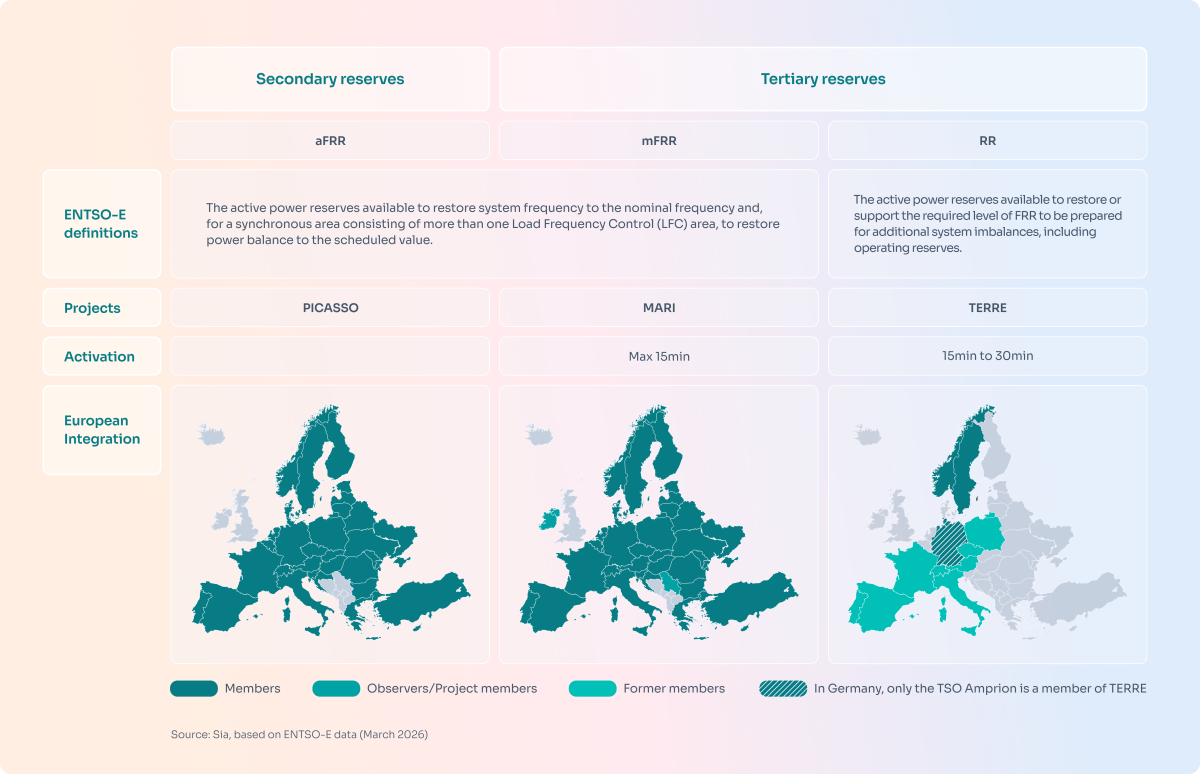
Four major EU-wide platforms have emerged under the EBGL:
PICASSO Balancing Platform provides several benefits in cross-border aFRR integration
Modus operandi of PICASSO
Among the balancing platforms, PICASSO stands out as Europe’s first cross-border automated balancing platform. It entered operation on June 1st, 2022, enabling from day one the coordinated exchange of aFRR across multiple countries.
PICASSO is powered by a central IT system operated by TransnetBW (a German TSO), which manages real-time optimization and settlement between participating TSOs. Each TSO connects securely to the platform and submits aggregated bids based on standard aFRR product definitions. Every four seconds, the platform runs a continuous activation cycle. While Balancing Service Providers (BSPs) submit their bids through national processes, TSOs forward aggregated information to PICASSO. The platform’s algorithm then selects the most cost-efficient combination of bids across countries. Once selected, activations are triggered via national systems and dispatched to the BSPs. By pooling automated reserves, PICASSO delivers major advantages: faster response times, increased market competition, more cost-effective operations, and a more efficient use of decentralized flexibility. For example, if the French TSO (RTE) detects a frequency drop and needs upward aFRR, it submits a balancing request on the PICASSO platform. At the same time, a German TSO (50Hertz) has BSPs with available upward aFRR capacity. PICASSO’s algorithm identifies these bids as the most cost-efficient to meet France’s needs and activates them. The German BSPs ramp up their output, and the resulting frequency correction supports system balance in France, while 50Hertz and RTE handle settlement and compensation through the platform.
Toward a pan-European market for aFRR exchange
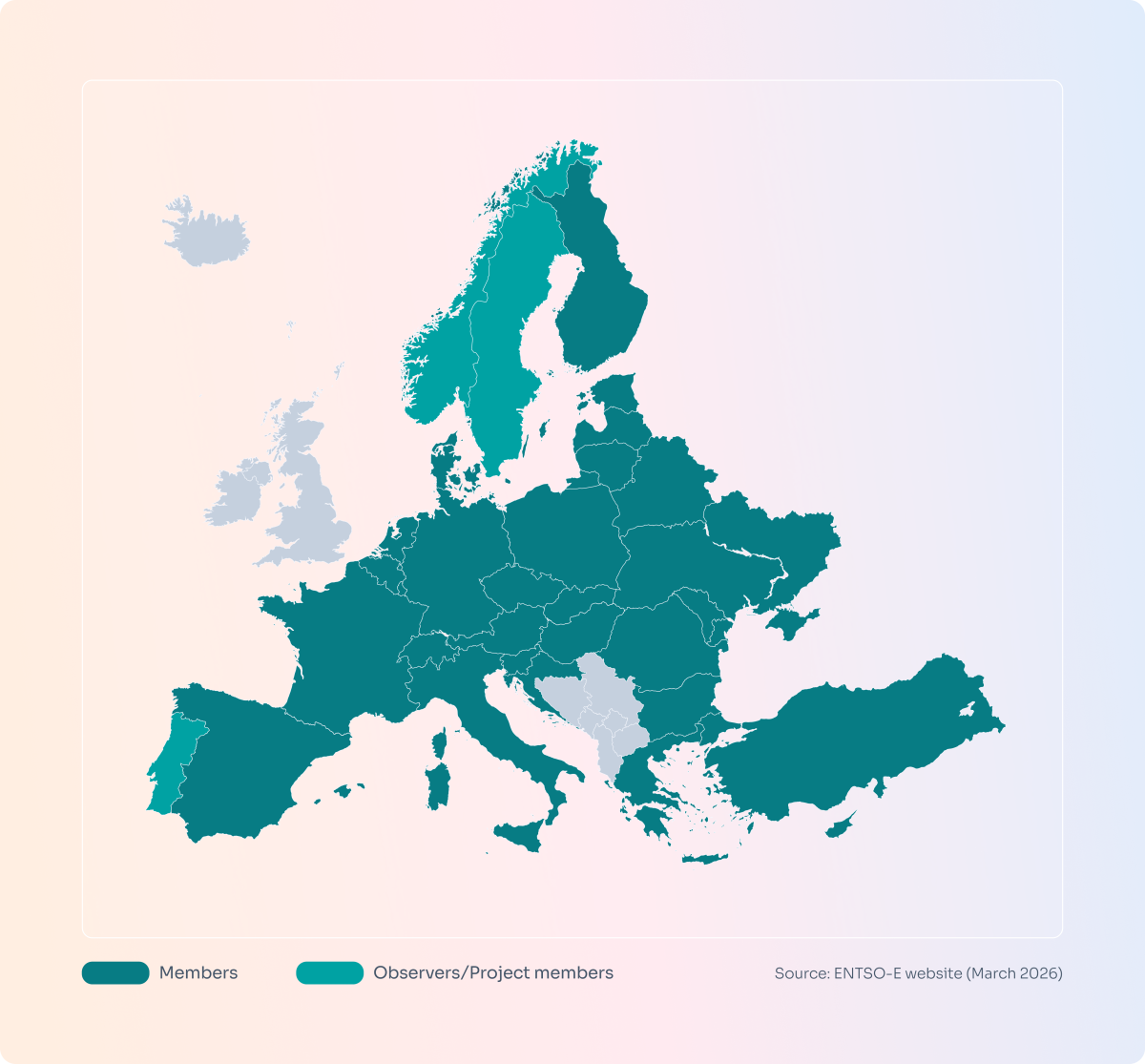
The end of 2024 and the first half of 2025 marked a major acceleration in PICASSO’s expansion, with a growing number of countries joining forces to exchange aFRR across borders. A key milestone came on April 2nd, 2025 with the accession of RTE (French TSO), Europe’s largest TSO. As of mid-2025, 20 TSOs have joined PICASSO, from Finland to Spain. In total, at least 27 TSOs are expected to join the platform over time. As more TSOs connect, particularly those bridging previously isolated regions, the benefits of full European integration are becoming clearer, pointing to greater efficiency and stronger grid stability. According to the latest ENTSO-E roadmap, Slovenia’s ELES is expected to connect in July 2026, followed by Portugal’s REN and Hungary’s MAVIR in Q3 2026. Then, next accessions are expected to take place in 2027 with Croatia’s HOPS in Q2, Romania’s Transelectrica in April and Sweden’s SVK in Q4 2027. Norway’s Stanett is expected to join in Q1 2028.
Poland’s accession was particularly significant, as it bridged two previously isolated balancing zones in Eastern and Western Europe. This connection links Western and Central Europe with the Baltic region and Finland, increasing the volume of available bids and positively impacting price formation. Another milestone occurred in spring 2025, when all three Baltic TSOs (Lithuania’s Litgrid, Latvia’s AST, and Estonia’s Elering) joined PICASSO shortly after disconnecting from the Russian-controlled IPS/UPS grid. The Baltics began aFRR energy procurement on April 10, followed by capacity procurement on April 15, marking a symbolic and strategic move toward energy independence and regional security.
In parallel, the integration of the Nordic region is progressing, albeit more gradually. TSOs in the Nordic bidding zones NO1–NO5 (Norway), DK1–DK2 (Denmark), SE1–SE4 (Sweden), and FI (Finland) require high-voltage direct current (HVDC) links for cross-border participation. So far, only Denmark’s Energinet and Finland’s Fingrid are connected to PICASSO. Denmark’s eastern region (DK2) is initially linked via the Storebælt cable, with plans to add further interconnections such as the COBRA cable (DK–Netherlands). Swedish and Norwegian TSOs are expected to join PICASSO by 2028.
The PICASSO project has markedly improved operational efficiency across participating countries, with potential efficiency gains estimated at hundreds of millions of euros. But while it may indirectly support lower prices and greater use of renewables, its core mission is far more pragmatic: safeguarding real-time stability across Europe’s power grid, regardless of carbon intensity or price.
However, concerns over potential price spikes and their impact on TSO engagement have prompted precautionary measures. To mitigate risks during the early years of the European balancing platforms, the Balancing Pricing Methodology was adopted by ACER3 on January 24th, 2020, and later amended by ACER Decision 03/2022 in February 2022. This framework introduced transitional price caps: an upper limit of €15,000/MWh and a lower limit of -€15,000/MWh, in effect for the first four years of platform operation, until July 2026. These safeguards are designed to apply broadly across all bid types on the platform, including emergency situations; their aim is also to limit the exposure of BSPs to excessively high imbalance prices. Overall, these limits are designed to ensure a stable rollout as TSOs gradually join and adapt to the new cross-border balancing model.
Despite these safeguards, PICASSO’s early years were not without challenges. In July 2023, Italy’s transmission system operator, Terna, joined the platform, only to witness sharp price spikes in cross-border imbalance settlements soon after. In February 2024, the balancing price reached nearly -9000 EUR/MWh, which was driven by two main factors: Italy had only partially offered its available volumes on the platform, and the border was uncongested. In March 2024, Terna suspended its participation in PICASSO, citing the unpredictability of imbalance prices and resulting financial losses, though it remained committed to the project. Terna returned as an operational member in November 2025 after mitigation measures were put in place to prevent similar incidents.
In response to these price spikes, several mitigation measures were rolled out:
These measures have bolstered confidence among TSOs, encouraging platform connections and reducing the risk of price spikes. The recent KPI report6 published in June 2025, covering July 2023 to December 2024, highlights three interesting indicators:
The KPI report confirms that maintaining the current platform’s strategy is both technically and economically justified, which is an important milestone for the project.
Accessions to PICASSO
Under the EBGL and the PICASSO Implementation Framework, all TSOs from ACER member countries are required to join the PICASSO platform. The current roadmap envisions full participation from 28 TSOs by 2028. However, Swissgrid’s (Swiss TSO) accession remains in limbo. Despite being technically ready and being geographically particularly relevant due to its location at the very centre of the European grid, Swissgrid has been blocked from joining due to the absence of an electricity agreement between Switzerland and the EU. The Federal Council opened a consultation process on a Swiss-EU package, with a potential referendum expected in late 2027 or early 2028. The Electricity Agreement would guarantee equal market access for participants in both the EU and Swiss electricity markets and foster cross-border trade.
Other TSOs involved in related balancing projects, such as MARI or IGCC, could also potentially join PICASSO, with Balkan operators like EMS (Serbia) and NOSBiH (Bosnia and Herzegovina) being key candidates. To the east, Ukraine is advancing toward integration by transposing core provisions of the Electricity Integration Package into national law. This legislative alignment is a prerequisite for joining the EU’s internal electricity market, including participation in single day-ahead and intraday market coupling as well as European balancing platforms like PICASSO.
Relationship with the other Balancing projects
Regarding the parallel European balancing platforms, two major developments are expected.
The first one is a closer integration of the MARI and PICASSO projects in the coming years due to the launch of the Capacity Management Function (CMF), which went live in 2023. The CMF plays a crucial role in improving the quality and efficiency of the European balancing platforms by continuously calculating available capacities on individual balancing borders and providing these updated values to the AOF of each respective platform.
Secondly, the TERRE project (Trans-European Replacement Reserves Exchange), which was launched in January 2020 to optimize the exchange and activation of Replacement Reserves (RR), has officially come to an end in March 2026. This decision stems from regulatory misalignments (current legal provisions conflict with the Electricity Balancing Guideline (EBGL) and the new Electricity Market Design Regulation (EMDR)) as well as upcoming changes to intraday gate-closure times. Specifically, the EMDR sets the Cross-Zonal Intraday Gate Closure Time to 30 minutes before the real time, a timeline that TERRE’s systems cannot accommodate since it is composed of a long Full Activation Time (FAT)9 of at least 30 minutes. This functional gap makes it impossible for the platform to comply with the revised market framework. Additionally, the planned introduction of a final RR process with 96 clearings per day would significantly reduce liquidity and result in a process very similar to that of MARI, thereby diminishing TERRE’s added value. As a result, while the end of TERRE may lead to increased activations on the MARI platform, it is not expected to have any impact on PICASSO.
Market evolution
The surge in renewable generation across Europe is another key challenge for the future of the PICASSO platform. Introducing greater supply variability and unpredictability, it leads to a significant uptick in the activation and exchange of aFRR on the PICASSO platform. As wind and solar outputs fluctuate, TSOs increasingly rely on PICASSO’s cross-border balancing to maintain system frequency, causing both the volume of traded balancing energy and the volatility of clearing prices on the platform to rise. In 2023, ACER reported a 10 % rise in hours dominated by “non‑responsive” generation (i.e. generation that cannot adapt to short-term fluctuations in demand, such as wind turbines or solar panels), a trend directly linked to more frequent price spikes and heavier use of balancing reserves. For example, after Denmark joined PICASSO, a 45 MW aFRR‑up activation in DK2 peaked at €2,100/MWh, while a 140 MW activation across DK1+DK2 on 12 February 2025 soared to €4,618/MWh during low‐wind periods. Over its first year, PICASSO recorded 235 high‑clearing‑price incidents (1.27 % of all quarter‑hours, as shown in the ENTSO‑E’s 2023 Market Report), highlighting how increased renewable variability drives both the volume of traded balancing energy and the volatility of clearing prices.
To handle these challenges, PICASSO uses price signals to absorb renewable-driven imbalances, as prices tend to be more attractive when there is excess energy, whereas physical cross-border capacity constraints limit the amount of energy exchanged between TSOs. By 2030, each EU country must have established interconnections that allow at least 15% of the electricity produced on its territory to be transported across its borders. This will significantly strengthen PICASSO’s role:
Together, these developments will make PICASSO far more robust and economically efficient.
With its scope, scale, and ambition, PICASSO is a pioneering project in electricity balancing. If it fulfils its promise, the platform has the potential to reshape balancing processes across territories shared by multiple TSOs, significantly impacting market integration.
As other regions begin developing their own balancing platforms, they may look to PICASSO for insights, both in terms of its successes and the early challenges that have since been addressed. For example, the Southern African Power Pool (SAPP), a cooperation of TSOs from 12 countries under the Southern African Development Community (SADC), is currently developing a similar platform. SAPP has already established a common power grid and an electricity market across the region10.
Meanwhile, the Gulf Cooperation Council Interconnection Authority is operating an energy market platform11, and deeper cooperation in that region could eventually lead to more integrated initiatives, similar to those in Europe. Additionally, countries like Australia and Japan, which each have multiple TSOs into their national territory, are actively exploring how to make their electricity markets more fluid. A shared balancing platform could be one solution. 12
PICASSO may therefore not only enhance Europe’s grid resilience but also serve as a global model for regional electricity integration.
At Sia, we support key players in the energy sector and play an active role in European balancing projects. We bring strong expertise in project management and operational excellence, backed by a deep knowledge of network balancing and hands-on experience with complex, multi-stakeholder initiatives.
Key takeaways
Partner, Energy, Resources & Utilities | Paris
Camille is a Partner in our Energy & Utilities practice. He leads smart grid developments, and supports grid operators and utilities in global transformation towards higher performance and sustainability for the benefit of the whole energy system.